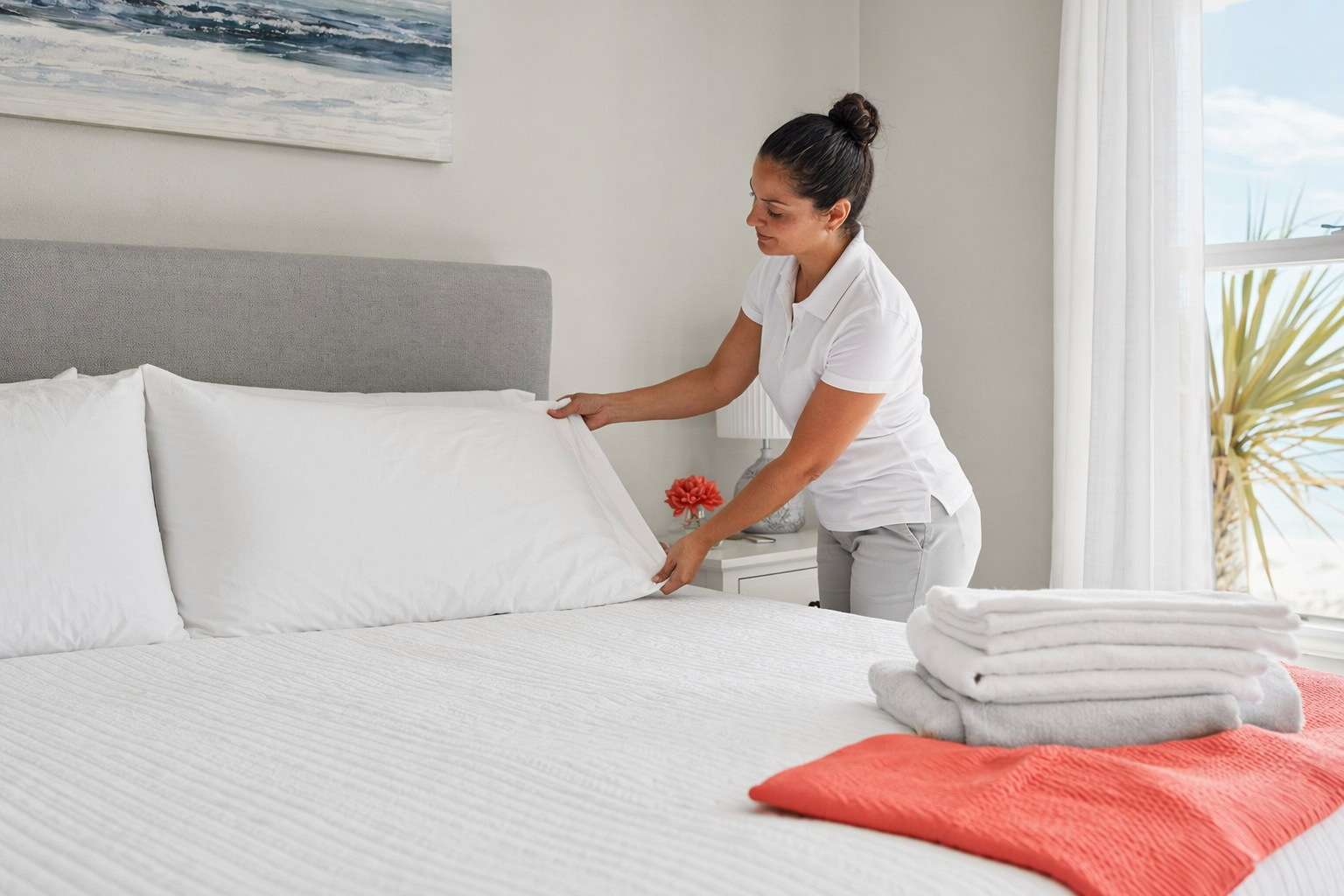
The short answer: typical Airbnb cleaning cost ranges
A typical illustrative range for a standard vacation-rental turnover is about $80 to $180 for a studio or 1-bedroom, $120 to $250 for a 2-bedroom, and $180 to $400+ for larger 3- to 5-bedroom homes. In high-cost beach, ski, or city markets, the same clean can run higher. In lower-cost areas, it can run lower.
Owners should separate what the cleaner charges from what the guest sees as a cleaning fee. Those two numbers are often different. Some owners pass through most of the cleaning cost to the guest, while others absorb part of it to stay competitive on total price.
If you are new to US short-term rentals, think of cleaning as a turnover cost per booking, not a monthly fixed bill. A home with many short stays may spend more on cleaning over a month than a home with fewer, longer bookings.
What owners usually pay by home size

Home size matters because cleaners price by bedrooms, bathrooms, square footage, and time on site. A 900-square-foot condo with one bathroom is usually much faster to reset than a 2,400-square-foot house with four bathrooms, outdoor space, and a grill.
Typical illustrative turnover ranges by size often look like this:
- Studio or 1BR: $80 to $180
- 2BR to small 3BR: $120 to $250
- Larger 3BR to 4BR: $180 to $320
- Large 4BR to 5BR+ homes: $250 to $400 or more
Laundry can change these numbers quickly. If the cleaner also washes multiple sheet sets, duvet covers, bath towels, pool towels, and kitchen linens off-site or over several machine cycles, the total can rise. Good listing setup also affects time. Clear photo standards and checkout instructions can reduce turnover labor, which is one reason owners look at things like listing optimization together with operations.
What changes the price on each turnover
The price is not only about size. The biggest drivers are checkout condition, same-day turnaround pressure, linen volume, pet stays, and how many surfaces must be reset. A simple two-night stay with light use may be easier than a week-long family stay with extra trash, dishes, and laundry.
Common factors that push cleaning cost up include:
- More bathrooms and beds
- Same-day check-in deadlines
- Outdoor areas like patios, pools, grills, and hot tubs
- Pet hair, sand, or mud
- Damage checks and reporting requirements
- Supply restocking during each turnover
Presentation standards matter too. If your home is marketed with a polished look, cleaners may spend more time on staging touches, folded towels, amenity setup, and photo-ready presentation. Strong visuals can help conversion, but they also raise the standard for turnover work. That is why many owners consider professional photos and cleaning quality as connected parts of the same guest experience.
How cleaning fees work for guests vs. owner costs
A guest-facing cleaning fee is pricing strategy. Your actual owner cost is operations. They are related, but not identical. For example, an owner may pay $180 for a turnover but charge guests $150, absorbing $30 to keep the total stay price more competitive. Another owner may charge $200 to cover cleaning plus a little extra laundry or restocking overhead.
This is important because platforms like Airbnb and VRBO show guests a total trip price, not just nightly rate. If the cleaning fee is too high for a short stay, conversion can drop. If the fee is too low, owner margins can get squeezed.
Many owners solve this by adjusting:
- minimum stay length
n- nightly rate by season
- guest cleaning fee
- whether some supply costs are built into rent
There is no single correct formula. The best setup depends on market, home type, and booking pattern. If you want local manager options that already know what owners in your area typically pay, you can get matched, free.
What is usually included in a standard vacation-rental clean
A standard turnover clean usually means the home is reset for the next guest, not that every item gets a deep scrub every stay. Most cleaners or managers include the basic work needed to make the property clean, sanitary, and guest-ready.
Typical standard items include:
- cleaning bathrooms, showers, sinks, mirrors, and toilets
- wiping kitchen counters, appliance fronts, and visible surfaces
- washing dishes or loading and unloading the dishwasher if needed
- vacuuming and mopping floors
- making beds and replacing used linens
- taking out trash and replacing liners
- checking for obvious damage or missing items
- light restocking of basics if supplies are provided
Always ask what "standard clean" means in writing. Some teams include laundry, basic amenity placement, and a visual inventory check. Others charge separately for those tasks. A short checklist can prevent misunderstandings and help you compare quotes fairly. For more owner basics, the main help center can be a useful starting point.
When deep cleaning, laundry, and restocking cost extra
Extra charges are normal when the work goes beyond a standard turnover. A deep clean may be billed seasonally, after a long stay, or when the home needs inside-fridge cleaning, baseboards, windows, upholstery attention, or heavier kitchen and bathroom detail work.
Common add-on charges may include:
- Deep cleaning: often $100 to $400+ depending on size and condition
- Laundry surcharge: especially for off-site wash-and-fold or very large linen loads
- Restocking fee: when the cleaner purchases paper goods, soap, coffee, or guest supplies
- Pet, smoke, or excessive-mess fee: when extra labor is clearly needed
- Hot tub, grill, or pool-area reset: if handled by the same team
Ask whether products are included and whether restocking is billed at cost, markup, or flat trip fee. Also remember that local rules on short-term rentals, permits, and health standards vary by city and state, so owners should confirm local requirements before setting a cleaning process.
How to compare local cleaners or managers without overpaying
The lowest quote is not always the lowest real cost. A cheap cleaner who misses damage, arrives late, or cannot handle same-day turns can cost more through refunds, bad reviews, or emergency labor. Compare quotes on scope, reliability, communication, and proof of process, not only price.
A simple way to compare options is to ask the same questions to each provider:
- What is the turnover price by bedroom count?
- What is included, and what costs extra?
- Is laundry on-site or off-site?
- Can you handle same-day turnovers?
- Do you send photos or a checklist after each clean?
- Who restocks supplies, and how is that billed?
If you prefer a local vacation-rental manager instead of hiring cleaners yourself, compare their cleaning process carefully. The owner still keeps title, control, and the choice of who to hire. Host Returns can help owners meet vetted local manager options, and matching is free to the owner.
Most owners pay cleaning per booking, and the real cost usually depends on home size, laundry, and how much work the cleaner does at each guest checkout.
Owner questions
Should my Airbnb cleaning fee match exactly what my cleaner charges?
Not always. Many owners charge guests a little less or a little more than the exact turnover cost depending on minimum stay, market norms, and total trip pricing.
Is laundry usually included in Airbnb cleaning?
Sometimes, but not always. Ask whether sheets, towels, duvet covers, and off-site wash-and-fold are included in the base turnover price or billed separately.
Do larger homes always cost more to clean?
Usually yes, but layout and turnover complexity matter too. A smaller home with many beds, pets, outdoor areas, or heavy laundry can cost more than you expect.
Can a property manager reduce my cleaning cost?
Sometimes they can through local vendor relationships and better scheduling, but costs still depend on your property and market. Ask for a clear breakdown of what is included versus billed as an extra service.