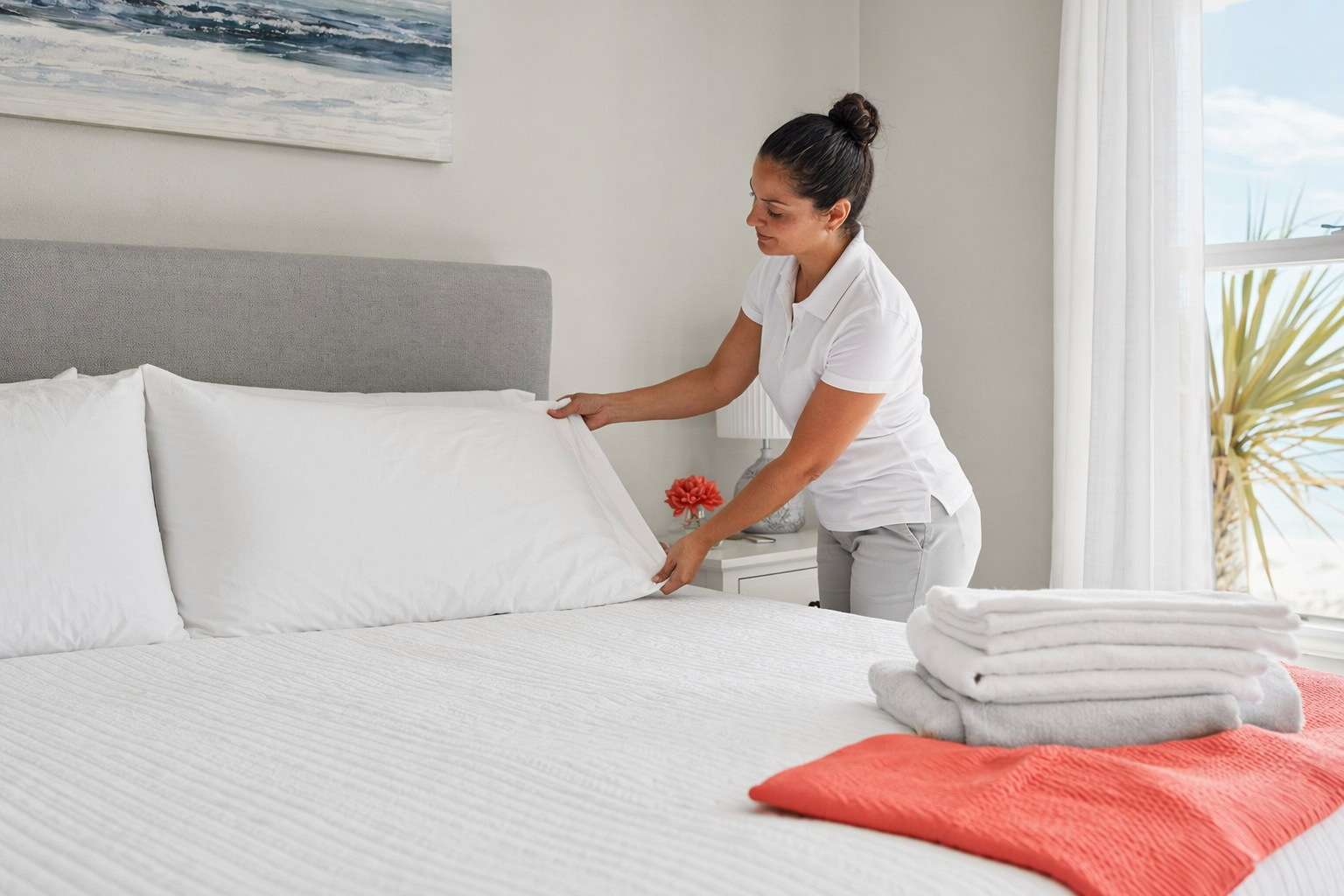
The short answer: clean after every checkout
A vacation rental should be cleaned after every checkout, even if the home looks tidy. This is the standard most guests expect, and it helps the next guest walk into a home that feels fresh, safe, and ready.
In vacation-rental management, this checkout clean is usually called a turnover. It normally includes cleaning, restocking basics, checking for damage, and resetting the home for the next stay. If you are new to the term, see what is a turnover in vacation rental management.
For most owners, the baseline schedule is:
- Clean and inspect after every guest departure
- Wash linens and towels after every stay
- Reset supplies before every arrival
Even one skipped turnover can lead to complaints, lower review scores, and missed maintenance issues.
When you may need extra cleanings during a stay

Not every reservation needs only one cleaning at checkout. Some homes need mid-stay cleanings or extra service visits, especially for longer bookings.
Extra cleanings are common when a guest stays 7 nights or more, when the property sleeps many people, or when there are pets, children, or heavy kitchen use. Luxury homes and larger homes also often need more attention because there are more bathrooms, more linens, and more surfaces to maintain.
A manager may suggest added service in situations like these:
- Stays longer than 1 week
- Homes with 8 or more guests
- Pet-friendly listings
- Properties with pools, hot tubs, or outdoor kitchens
If you are not sure whether extra cleanings make sense, a local manager can compare your home to similar listings and explain what is typical in your market. You can get matched, free to talk with vetted local companies.
What should be cleaned every turnover
Every turnover should cover both appearance and inspection. A home can look clean but still have missing supplies, stained linens, a leaking toilet, or damage that needs quick attention.
At minimum, each turnover should include all guest-use areas: bedrooms, bathrooms, kitchen, living areas, entryways, and outdoor areas that are part of the listing. Laundry should be fully refreshed unless the home uses a clearly disclosed linen program.
A strong turnover checklist usually includes:
- Fresh sheets, pillowcases, bath towels, and kitchen towels
- Sanitizing kitchen counters, sinks, appliances, and bathrooms
- Sweeping, vacuuming, and mopping floors
- Removing trash and checking outdoor bins
- Restocking paper goods, soap, and other approved supplies
- Inspecting for damage, stains, missing items, and maintenance issues
- Testing basics like lights, TV remotes, Wi-Fi, locks, and HVAC
If owners want better consistency, they should ask whether the manager uses a written checklist, photo documentation, and arrival-ready inspections. That process often matters as much as the cleaning itself.
What to schedule weekly, monthly, and seasonally
Turnovers handle the day-to-day reset, but they do not replace deeper recurring work. Most vacation rentals need a second layer of cleaning and maintenance on a weekly, monthly, or seasonal schedule.
Weekly or frequent tasks may include checking under furniture, wiping baseboards in high-traffic areas, cleaning glass doors, spot-cleaning walls, and inspecting outdoor spaces. In busy seasons, these may happen more often.
Monthly or seasonal tasks often include:
- Deep cleaning ovens, refrigerators, and small appliances
- Washing windows and checking screens
- Shampooing rugs or treating upholstery as needed
- Cleaning air vents and changing filters on schedule
- Pressure washing exterior surfaces where appropriate
- Deep cleaning grills, patios, and outdoor furniture
This schedule should match your market and calendar. A beach condo in peak summer and a mountain cabin in shoulder season will not need the same routine. Rules about short-term-rental health, waste, and permit standards also vary by city and state, so owners should confirm local requirements.
How property size, guest count, and pet rules change the plan
A studio for 2 guests does not need the same cleaning plan as a 5-bedroom home for 12. More square footage, more bathrooms, and more guests usually mean more labor, more laundry, and more inspection time.
Pet-friendly homes usually need more frequent floor care, upholstery checks, odor control, and yard cleanup. Homes with bunk rooms, sleeper sofas, game rooms, and pools also tend to have more wear between stays.
Cleaning plans usually change based on:
- Number of bedrooms and bathrooms
- Maximum guest count
- Pet policy
- Carpet vs. hard flooring
- Outdoor amenities like pools, grills, decks, or hot tubs
- Whether the home gets many short stays or fewer long stays
This is one reason cleaning costs can vary a lot from one property to another. A typical illustrative turnover-cleaning range might be about $90 to $180 for a small condo and $200 to $450+ for a larger home, depending on market, size, and season. These are not quotes or guarantees, just common examples owners may hear.
How cleaning frequency affects reviews, damage prevention, and cost
Cleaning frequency affects more than cleanliness. It also affects guest reviews, maintenance speed, and operating cost. Homes cleaned consistently are more likely to catch stains, broken items, leaks, and supply problems before they become expensive issues.
From a guest perspective, cleanliness is one of the fastest ways to earn either a strong review or a complaint. Guests may forgive small decor flaws, but they usually react quickly to hair, odors, dirty floors, or stained linens. Clean homes also support better pricing position, especially when managers are adjusting rates based on demand and nearby listings. If you want to understand that side, read how do managers set nightly rates.
Cleaning more often can raise operating cost, but cleaning too little can cost more later. Typical illustrative deep-clean or recovery-clean charges are often higher than standard turnover rates, especially after pet damage, smoke issues, or neglected long stays.
A good rule is simple: use the lowest cleaning frequency that still protects guest experience and the home itself. For most short-term rentals, that still means every checkout, plus added service when the stay or property calls for it.
A simple cleaning schedule owners can use
Owners who want a basic system can start with a simple schedule and adjust after a few months of real bookings. The goal is not perfection on paper. The goal is a routine that keeps the property consistently guest-ready.
Try this starter plan:
- After every checkout: full turnover clean, laundry, restock, and damage check
- For stays over 7 nights: consider one mid-stay cleaning or inspection
- Weekly in busy season: quick deep-touch check for windows, corners, outdoor areas, and inventory
- Monthly: deeper kitchen, appliance, vent, and upholstery cleaning as needed
- Seasonally: exterior wash, HVAC-related checks, mattress review, and larger deep-clean items
If you do not want to manage this yourself, compare local companies and ask how they schedule turnovers, deep cleans, and inspections. You can browse more owner answers in Help or get matched, free to speak with local vacation-rental managers.
Clean the rental after every guest leaves, and add extra cleanings for long stays, big groups, pets, and busy seasons.
Owner questions
Do I really need to clean after a one-night stay?
Yes. Even a one-night stay should be followed by a full turnover clean and inspection before the next guest arrives. Short stays can still create laundry, trash, odors, spills, and maintenance issues.
Should long-stay guests get a mid-stay cleaning?
Often, yes, especially for stays longer than a week or for larger homes. The exact schedule depends on the property, guest count, and your house rules.
Can I save money by doing deep cleans only and fewer turnover cleans?
Usually that creates more risk than savings. Regular turnover cleaning helps protect reviews and catch damage early, while deep cleans are better used as an added layer, not a replacement.
Who decides the cleaning schedule, me or the manager?
You keep control of the property and choose what service plan to approve. A local manager can recommend a schedule based on your market and home type, but the final hiring decision stays with you.