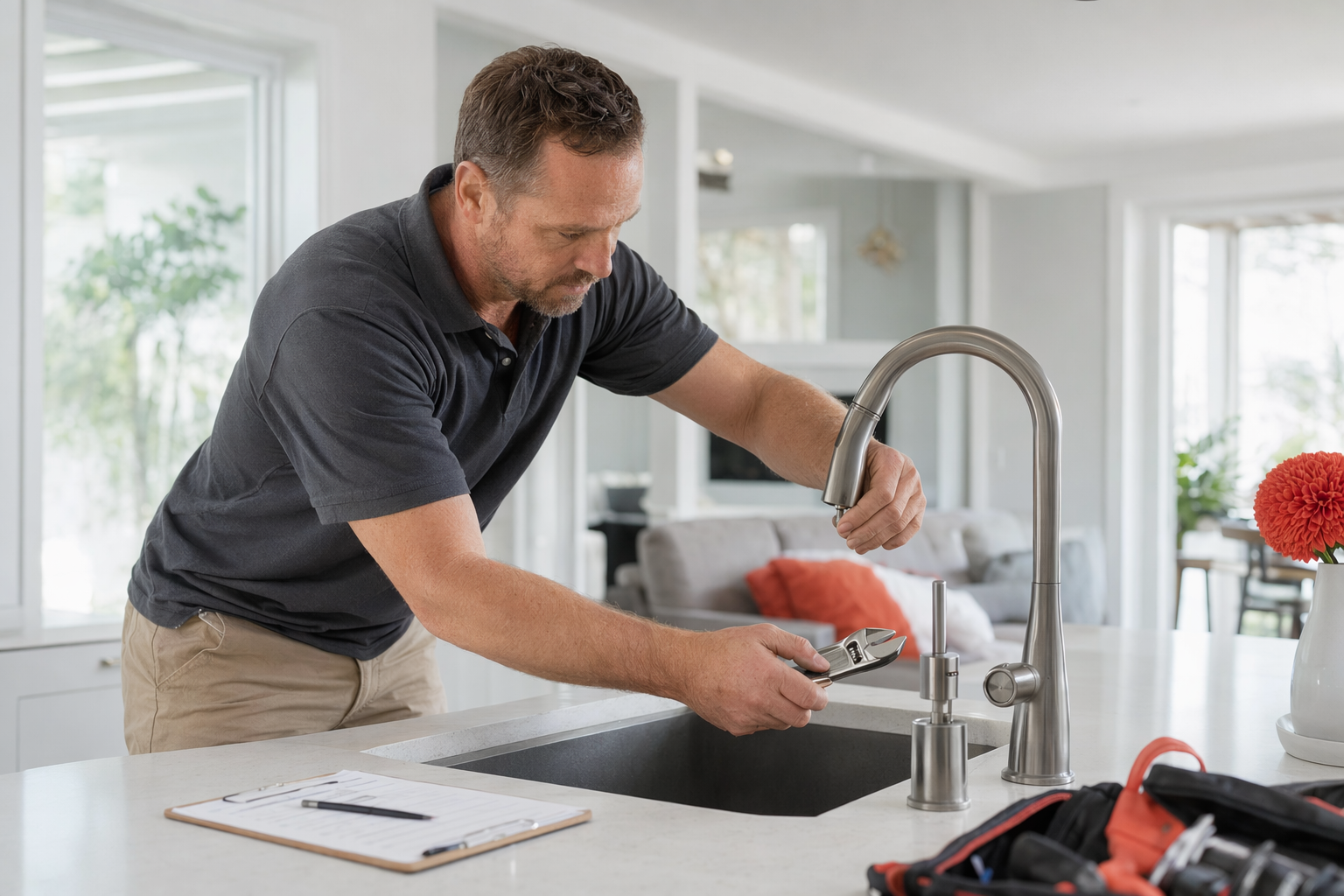
What counts as a maintenance emergency in a vacation rental
A maintenance emergency is usually a problem that affects guest safety, security, or basic livability right now. Think no heat during cold weather, no air conditioning during extreme heat, active water leaks, flooding, sewage backup, power loss in part or all of the home, gas smell, lockouts, broken exterior doors, or a toilet issue when the home has only one working bathroom.
Not every repair is an emergency. A dripping faucet, a loose cabinet handle, one broken dining chair, or a TV remote issue may be urgent to the guest, but many managers classify those as same-day or next-business-day service, not after-hours emergency dispatch.
Typical managers define emergencies in writing so there is less confusion. Ask whether they separate issues into:
- Immediate emergency: safety, water, power, heat, cooling, access
- Urgent but not emergency: appliance failure, internet outage, minor plumbing issue
- Routine maintenance: cosmetic wear, small repairs, preventive items
This matters because after-hours vendor rates are often higher than daytime rates, and a manager should know when fast action is necessary and when waiting until morning is reasonable.
Who takes the first call and how fast they usually respond

In most setups, the first call or message goes to the manager's guest-support line, on-call staff member, or answering service. Some small local companies rotate this duty between team members. Larger companies may have 24/7 guest messaging plus a local on-call person for true emergencies.
A practical standard is a fast first response, not instant repair. Typical illustrative response windows many owners look for are:
- Guest message acknowledged within about 5-30 minutes for clear emergencies
- Basic troubleshooting started right away by phone or text
- Vendor contacted as soon as the issue is confirmed urgent
- Owner updated once the manager knows the likely cause and next step
Response speed and resolution speed are not the same. A plumber at 2:00 a.m. may not arrive in 10 minutes, especially in rural or seasonal markets. What matters is whether the manager has an actual on-call process, backup contacts, and clear documentation.
If you are comparing companies, ask to see their emergency workflow in plain language. If they cannot explain who answers at night, weekends, and holidays, that is a warning sign. You can also get matched, free if you want to compare local managers with different support models.
How managers troubleshoot before sending a vendor
Good managers usually try a few simple steps before dispatching a vendor, because some "emergencies" are guest-use issues or quick resets. This can save time, reduce after-hours charges, and solve the problem faster for the guest.
Typical troubleshooting may include asking the guest for photos or a short video, checking smart-home alerts, confirming whether a breaker tripped, verifying thermostat settings, checking whether a door battery died, or asking if a water shutoff valve is visible and safe to use. For internet or access issues, remote resets sometimes fix the problem in minutes.
This step should be limited and practical. Managers should not ask guests to do unsafe tasks, handle gas, climb ladders, or open equipment panels. The goal is to confirm the problem and send the right pro the first time.
A manager who handles listing details well often also handles issue triage better, because the home guide, appliance labels, and property notes are clearer. That is one reason owners often ask about what is a listing optimization process when they compare managers.
What happens with plumbers, HVAC techs, locksmiths, and other local pros
Most managers keep a preferred vendor list for common emergency categories: plumbers, HVAC technicians, electricians, appliance repair, locksmiths, handymen, cleaners, and sometimes restoration companies for water damage. In many markets, the manager does not employ these specialists directly. They coordinate local licensed or qualified vendors and track arrival, photos, and invoices.
A strong vendor network usually means the manager knows:
- who answers after hours
- who services your exact neighborhood
- who is insured and reliable
- who can do temporary stabilization if a full repair must wait
For example, a plumber may stop a leak and restore basic use first, then return later for a full part replacement. An HVAC tech may provide a temporary fix or confirm whether a system needs same-day replacement decisions. A locksmith may rekey, replace batteries, or secure a damaged lock so the next guest can still check in.
Owners should remember that vendor availability varies by city, small town, resort area, and season. Permit and licensing rules also vary by state and city, so confirm local requirements for repairs or replacements before work starts if the job is significant.
How guest communication is handled during an urgent repair
During an urgent repair, guest communication should be calm, specific, and frequent. The manager's job is to tell the guest what is happening, what has been tried, who is coming, and when the next update will be sent. Silence creates worse reviews than many repair issues do.
A practical guest-update sequence often looks like this:
- Acknowledge the issue and apologize for the disruption
- Confirm whether the guest is safe and the home is usable
- Explain the next step, such as troubleshooting or vendor dispatch
- Give a realistic time window for the next update
- Share entry instructions and expected visit timing
If the repair affects cleaning, turnover, or a same-day arrival, the manager should coordinate all three sides: current guest, incoming guest, and service vendors. That is why some owners also review related operating details like how much does Airbnb cleaning cost when evaluating how organized a manager really is.
When needed, managers may offer guest relocation options or partial remedies, but the exact policy depends on the manager's agreement, the booking channel, and the facts of the stay. Owners should ask how those decisions are documented.
How repair approvals, spending limits, and owner updates usually work
Most management agreements set a pre-approved spending limit for urgent repairs. A common illustrative structure is a cap such as $200, $300, $500, or more for emergency work, but the right number depends on your market, property type, and your tolerance for after-hours delays. This is not a quote or standard rate, just a typical way managers organize decisions.
The reason for a spending limit is simple: if a pipe is leaking or guests are locked out, the manager may need authority to act before they can reach you. Without that authority, delays can increase damage, refund risk, or guest dissatisfaction.
Before signing, ask how the manager handles:
- emergency spend limits
- owner approval for larger repairs
- photo and invoice documentation
- markups or coordination fees, if any
- replacement decisions versus temporary fixes
- timeline for owner updates
A clear process often works like this: the manager stabilizes the issue, informs the owner, gets approval if the repair exceeds the agreed limit, and sends photos plus invoices afterward. The owner still keeps title, control, and the choice of who to hire.
Questions to ask before hiring a manager
Do not stop at "Do you offer 24/7 support?" Ask exactly how emergency handling works at midnight, on weekends, and on holidays. You want a process, not a marketing phrase.
Useful questions include:
- Who answers emergency calls after hours?
- What problems do you classify as true emergencies?
- What is your typical first-response process?
- Do you have backup plumbers, HVAC techs, and locksmiths?
- What spending limit can you use without owner approval?
- How do you document repairs, invoices, and guest communication?
- How do you handle guest relocation or compensation requests?
Also ask for one or two anonymized examples of how they handled a leak, lockout, or AC outage. You are not looking for promises. You are looking for organized decision-making, local vendor depth, and honest communication. For more basics, you can browse the main help center.
A good manager should answer fast, verify the problem, send the right local repair person, keep the guest informed, and tell you what was spent and why.
Owner questions
Can a manager approve an emergency repair without asking me first?
Often yes, if your management agreement includes a pre-approved emergency spending limit. Ask what that limit is, what counts as an emergency, and how quickly you will be updated.
Do all managers have 24/7 emergency service?
No. Some have true local on-call coverage, while others rely on next-morning follow-up for non-safety issues. Ask who answers nights, weekends, and holidays, and whether they dispatch local vendors after hours.
Will a manager use their own repair team or outside vendors?
Either is possible, but many vacation-rental managers coordinate outside local pros such as plumbers, HVAC technicians, and locksmiths. Ask how they choose vendors, how invoices are handled, and whether any coordination fee applies.
What if a guest causes the damage?
The manager should document the issue with photos, messages, and invoices, then explain the next steps under your house rules and booking-channel process. The outcome depends on the facts, the booking source, and your agreement, so ask how claims are typically handled.