
Why guest communication matters to owners
Good communication helps protect both the guest experience and the owner’s property. A clear message before check-in can prevent lockout calls, parking confusion, extra cleaning, and disputes about house rules.
For many owners, this is also a time issue. Guests may message early in the morning, late at night, or while the owner is at work. A local manager can take that daily communication load off the owner while the owner keeps title, control, and the final choice of who manages the home.
Communication also affects how smoothly other operations run. If arrival details, occupancy limits, pet rules, and checkout steps are explained well, cleaners and maintenance teams usually deal with fewer surprises. That is why guest messaging often connects closely with maintenance and inspections and other local support work.
Typical pain points owners mention include:
- repeated questions about check-in and Wi-Fi
- late-night calls about access or noise
- guests not reading house rules
- slow follow-up after complaints or damages
What a manager handles before, during, and after each stay
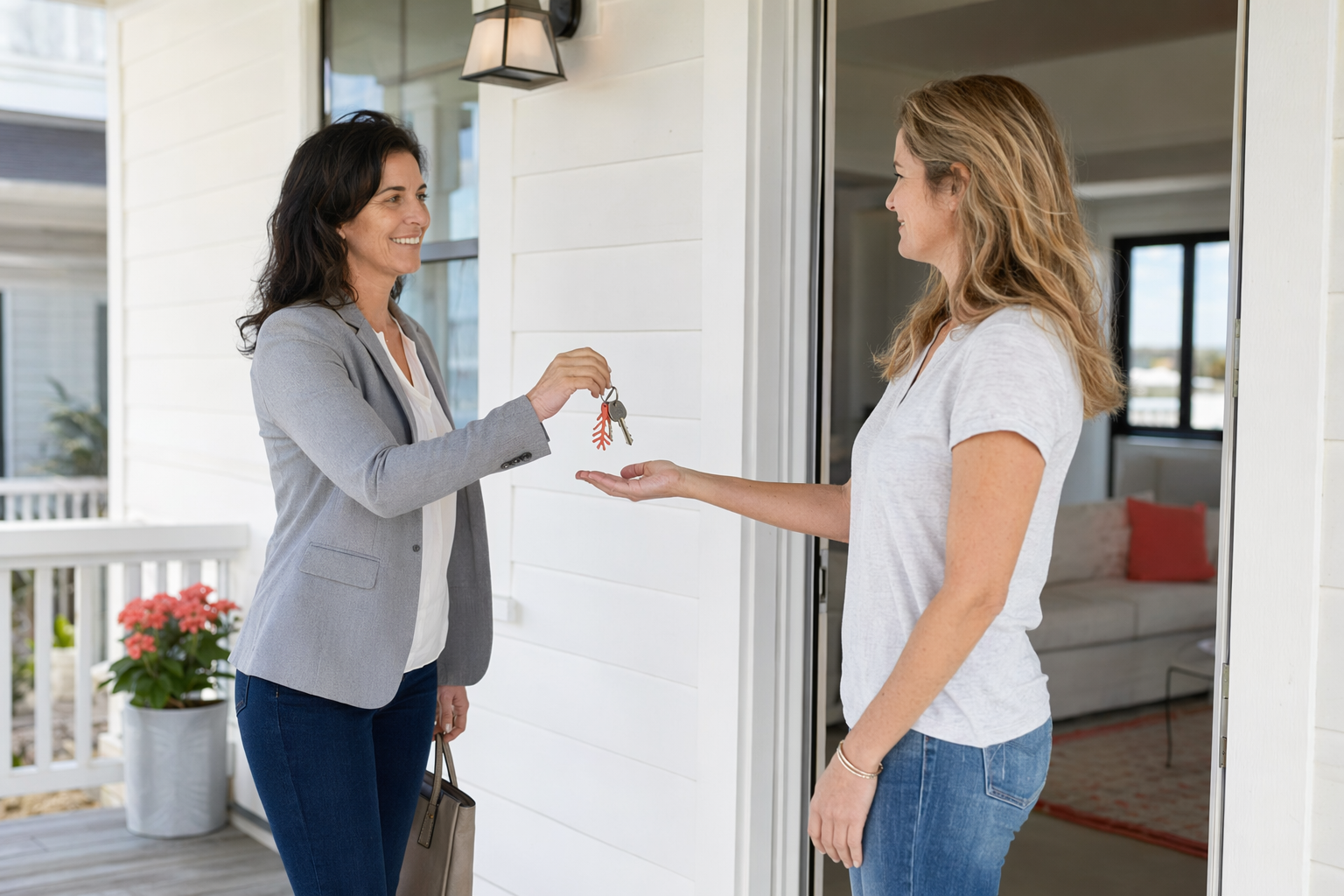
Before arrival, a manager usually handles inquiry replies, booking confirmations, rental-agreement steps if used in that market, pre-arrival instructions, and reminders about house rules. They may also answer common questions about parking, local access, child-friendly features, pet policy, and early check-in requests.
During the stay, communication often shifts to support and problem-solving. That can include lock codes, thermostat help, internet issues, extra towel requests, noise complaints, neighbor concerns, and escalation if something breaks. A local team can often pair messages with on-the-ground action faster than an owner who lives in another city or country.
After checkout, the manager may send thank-you messages, request feedback, coordinate lost-and-found, document any reported damage, and follow up with cleaning or maintenance vendors. If a stay uncovered permit or rule questions, owners should remember that local requirements vary by city and state and should be confirmed locally. A manager may help operationally, but owners should still review compliance and licensing expectations in their market.
A simple way to think about the job:
- Before stay: answer, confirm, prepare
- During stay: support, troubleshoot, document
- After stay: inspect, follow up, close the loop
Typical response standards and coverage hours
Most owners should ask about response speed in plain numbers. A common operational target is replying to new guest messages within minutes during business hours, with urgent in-stay issues prioritized faster. Exact standards vary by market, staffing, and season, so any number should be treated as a typical operating range, not a promise.
Coverage hours matter as much as response time. Some managers offer extended daily coverage, such as early morning to late evening, while others provide 24/7 emergency handling only for urgent issues like lockouts, leaks, safety concerns, or no-heat calls. Owners should ask what counts as an emergency and who answers after hours.
Useful questions include:
- What are your normal guest communication hours?
- Do you offer 24/7 emergency coverage?
- Who answers messages: local staff, a central team, or software first?
- How do you handle non-English-speaking guests?
- How do you document response times and issue resolution?
If the owner is comparing options, it helps to see these standards side by side with other services on the broader services page. The key is not finding a perfect promise. It is finding a process that fits the home, guest type, and owner’s comfort level.
How communication affects reviews, rebooking, and damage risk
Fast, calm, accurate communication can improve the chance that small issues stay small. A guest who gets help quickly with the front door, hot water, or Wi-Fi is often easier to recover than a guest who waits hours for a reply. That can influence review tone, complaint volume, and whether the guest wants to return.
Communication also helps reduce avoidable damage risk. Clear pre-arrival messages about occupancy limits, smoking rules, parking, and quiet hours can prevent misunderstandings. During the stay, documented messaging creates a record of what the guest reported, when they reported it, and what steps the manager took.
This does not mean communication guarantees better reviews or more repeat bookings. Results always depend on the property, market, season, price, condition, and local competition. But many owners see guest messaging as a controllable part of operations that supports better consistency.
Owners often value communication for three practical reasons:
- fewer unresolved guest complaints
- clearer documentation when something goes wrong
- less owner time spent handling routine questions
Tools managers use to keep messages organized
Most professional managers do not rely on one phone and one inbox. They usually use a mix of channel inboxes, automated templates, CRM or PMS systems, task tools, and escalation workflows so guest messages do not get lost.
Typical tools and processes may include:
- a unified inbox for Airbnb, VRBO, direct bookings, text, and email
- saved templates for check-in, checkout, Wi-Fi, parking, and house rules
- automated scheduling for pre-arrival and day-of-departure messages
- internal ticketing for maintenance, cleaning, and inspection follow-up
- translation support for multilingual guests when needed
Automation can help, but owners should ask where human review starts. A useful system sends routine information automatically but hands unusual issues to a real person quickly. That balance matters when a guest is upset or when the problem involves safety, access, or possible property damage.
If you want help comparing local teams that already have these systems in place, you can get matched, free. Host Returns is a flat-fee marketing and matching service for managers, and matching is free to owners.
Questions to ask before you hire a local manager
Owners should ask specific, operational questions instead of broad ones like "Do you handle guests well?" The goal is to understand staffing, escalation, language support, documentation, and how communication connects to cleaning and maintenance.
Start with these:
- What channels do you monitor: Airbnb, VRBO, phone, text, email, direct bookings?
- What are your normal response-time targets for new inquiries and in-stay issues?
- Who handles nights, weekends, and holidays?
- Do you support guests in more than one language?
- How do you document complaints, refunds, damages, and rule violations?
- How do guest issues get handed to cleaners or maintenance vendors?
- Will I see message logs or owner summaries?
Also ask about pricing clearly. Managers may charge a percentage-based management fee, a fixed monthly amount, or separate operational fees depending on the market and service model. Communication support may be included in full-service management or priced separately in some local arrangements. Owners should ask for a written fee schedule and what is included.
The most useful answer is usually concrete, not polished. A strong local manager should be able to explain who answers, how quickly they aim to respond, how they escalate, and what the owner sees afterward.
Common gaps that lead to owner stress
Owner stress usually comes from gaps, not from one difficult guest. A few missed messages, unclear house rules, no after-hours backup, or poor handoff between messaging and maintenance can turn a normal stay into a long chain of problems.
Common gaps include no documented response standards, overuse of automation, unclear emergency definitions, weak multilingual support, and poor follow-through after checkout. Another issue is when the person answering the guest cannot actually dispatch help locally.
Watch for these warning signs:
- no clear coverage schedule
- no backup for nights or holidays
- no written process for lockouts, leaks, or noise complaints
- no message history shared with the owner
- no coordination with cleaners or maintenance teams
For many owners, the right communication setup brings peace of mind more than anything else. It means guests know what to do, issues are tracked, and the owner is not the first person called every time a door code fails or a smoke detector chirps.
Good guest communication means guests get answers quickly, problems are tracked clearly, and you do not have to handle every message yourself.
Owner questions
Do I need 24/7 guest communication for one property?
Not always, but you do need a reliable plan for urgent issues outside normal hours. Many owners choose a manager or local support setup that covers emergencies at all times, even if routine questions are answered during extended daytime hours.
Can a manager answer guests in another language?
Some can, and some use translation tools plus trained staff. If this matters to you, ask which languages they support directly and how they handle misunderstandings in urgent situations.
Will better guest communication increase my bookings?
It may support a smoother guest experience, but no one can honestly promise more bookings, occupancy, or income from communication alone. Results depend on the market, property, season, pricing, and many other factors.
How much should guest communication service cost?
Pricing varies by market and service model. Some managers include it in a full-service management fee, while others separate certain support tasks, so ask for a written breakdown of what is included and what triggers extra charges.
Can I still approve important decisions if a manager handles guest messages?
Yes, in most setups the owner keeps title and chooses the approval rules. You can ask the manager which issues they solve on their own and which ones they escalate to you first.