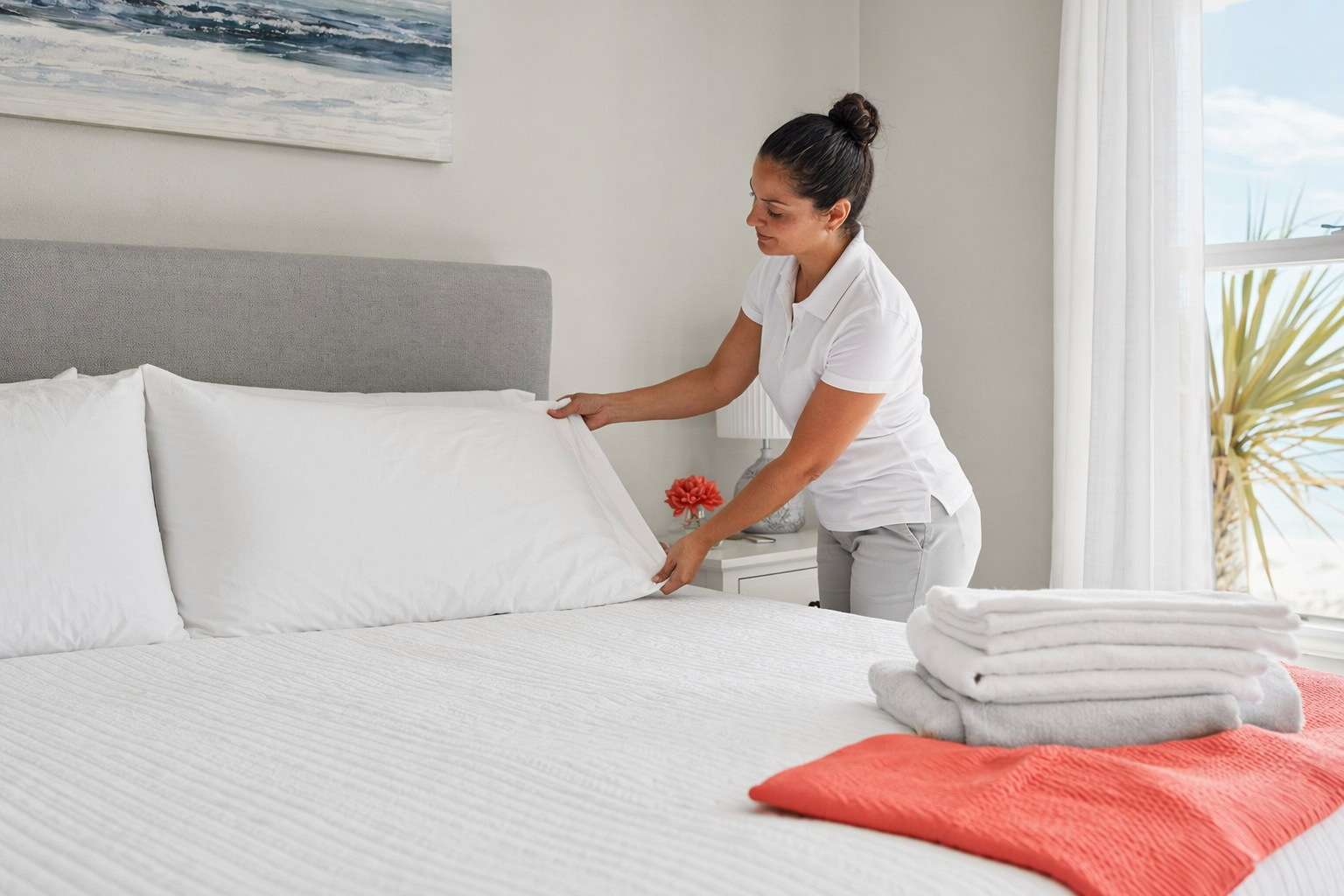
Short answer: the guest usually pays the cleaning fee
In most cases, the cleaning fee on Airbnb is charged to the guest at booking. It is usually shown as a one-time fee for the stay, not a nightly charge.
That said, the owner is still the one who decides whether to charge it, how much to charge, or whether to build some or all of the cleaning cost into the nightly rate. So while the guest usually pays the fee on the reservation, the owner is still responsible for the pricing strategy behind it.
A simple way to think about it:
- Guest pays the cleaning fee shown in the booking total
- Owner sets the fee amount
- Cleaner or manager is then paid from the rental proceeds based on the real turnover cost
If you are new to short-term rentals, it also helps to understand what a turnover in vacation rental management means, because that is the service this fee is usually meant to cover.
How the cleaning fee appears in the booking total

On Airbnb, the cleaning fee is typically displayed as a separate charge in the guest's total. A guest may see the nightly rate, cleaning fee, taxes, and platform service fees all listed before they confirm the booking.
This matters because guests do not look only at the nightly rate. Many compare the full stay total, especially for short visits. A home with a low nightly rate but a high cleaning fee can look expensive once everything is added together.
For example, a guest comparing two 2-night stays may notice:
- Listing A: lower nightly rate, higher cleaning fee
- Listing B: higher nightly rate, lower cleaning fee
- Total price may end up very similar
That is why owners and local managers often review the full guest checkout view, not just the advertised nightly number. If you want help pages on related basics, you can also browse the main help center.
What the cleaning fee is meant to cover
The cleaning fee is generally meant to cover the turnover clean after a guest checks out and before the next guest arrives. This is not just sweeping and changing sheets. In many markets, a proper turnover includes labor, laundry, restocking basic supplies, inspection, and preparation for the next stay.
Typical items covered may include:
- Cleaning bathrooms, kitchen, floors, and surfaces
- Washing and replacing linens and towels
- Resetting beds and staging the home for arrival
- Checking for damage or missing items
- Replacing starter supplies if that is part of your setup
In some homes, the actual turnover cost may be modest. In larger homes, luxury homes, or properties with hot tubs, grills, pools, or many beds, the real cost can be much higher. A typical illustrative cleaning cost range might be about $75 to $350+ per turnover, depending on home size, layout, amenity count, and local labor rates. That is not a quote or promise, just a common market-style range.
When an owner may choose to lower, raise, or remove it
Owners do not all use the same approach. Some charge the full turnover cost as a separate fee. Others lower the cleaning fee and recover more of the cost through the nightly rate. Some may remove the separate cleaning fee entirely if they want a simpler guest price display.
An owner may consider lowering the cleaning fee when short stays are not converting well, when nearby listings show lower total checkout prices, or when the home is easy and inexpensive to turn over. An owner may consider raising it when the property has a larger footprint, heavier laundry, more bathrooms, pet stays, or added amenities that create more labor.
Removing the separate fee can make sense when:
- You want a cleaner-looking guest price
- You mainly target longer stays
- Your nightly rate can absorb the turnover cost
There is no one perfect setup for every market. A local manager can review your layout, guest mix, and cleaning cost structure before you decide whether to keep the fee separate or bundled.
How cleaning fees can affect guest conversion and length of stay
Cleaning fees often affect short stays more than long stays. A $150 cleaning fee spread across a 2-night stay feels much heavier to a guest than the same fee spread across a 7-night stay.
This is one reason some owners use cleaning fees together with minimum-night rules. If a home has a relatively high turnover cost, the owner may prefer 3-night, 4-night, or longer bookings so the total price feels more reasonable to the guest.
A local manager may look at typical illustrative performance measures like occupancy, ADR, and RevPAR before suggesting changes, but no result is guaranteed. The goal is usually to balance three things:
- Real cleaning cost
- Competitive guest checkout price
- Booking patterns by stay length and season
If your current setup is not attracting the right stays, it can help to get matched, free with local vacation-rental managers who know your market and can review your pricing structure.
What local managers often review before setting the fee
A good local manager usually does not guess. They review the home and the market before recommending a cleaning fee. That includes the real labor involved in each turnover and how guests in that area respond to total trip pricing.
Common review points include:
- Number of bedrooms, bathrooms, and beds
- Laundry volume and linen setup
- Parking, stairs, outdoor areas, and amenity complexity
- Local cleaner rates and availability
- Typical stay length in that neighborhood
- Whether the property needs extra inspection after checkout
They may also review how often the home should receive deeper service beyond turnovers. If that is part of your question, see how often should a vacation rental be cleaned.
Common mistakes owners make with cleaning fees
One common mistake is setting the fee based only on what "sounds fair" instead of the real turnover cost. If the fee is too low, the owner may quietly lose money on every short stay. If it is too high, guests may abandon the booking when they see the final total.
Another mistake is forgetting that cleaning pricing is part of the overall revenue strategy, not a separate issue. A high cleaning fee with a low nightly rate can perform differently from a moderate cleaning fee with a stronger nightly rate, even if the owner earns a similar gross amount before expenses.
Watch out for these problems:
- Charging one flat fee for homes with very different turnover needs
- Not updating the fee when labor costs change
- Ignoring guest reaction to the full checkout total
- Assuming the highest fee always protects profit
The best approach is usually simple: know your true cleaning cost, compare the guest total against nearby options, and adjust carefully rather than making large pricing moves all at once.
Usually the guest pays the cleaning fee on Airbnb, but the owner decides the amount and should set it based on real cleaning cost and a competitive total price.
Owner questions
Can I make the guest pay cleaning, or do I have to pay it myself?
Usually the guest pays the cleaning fee shown in the booking total, but you choose whether to charge that fee separately. Some owners instead build part or all of the cost into the nightly rate.
Should my cleaning fee match exactly what the cleaner charges me?
Not always, but it should usually stay close to your real turnover cost and your market position. Many owners also look at how the total guest price compares with similar listings before setting the final number.
Is it better to remove the cleaning fee completely?
Sometimes, especially if you want a simpler guest price or mostly attract longer stays. The right choice depends on your property, local competition, and actual turnover cost.
Can a high cleaning fee hurt bookings?
It can, especially on shorter stays, because guests often compare the full trip total rather than just the nightly rate. There is no guaranteed outcome, so owners usually test pricing carefully and review local market response.